
City Zoning Board Reclassifies Always-On Local Agents as Home Occupants Requiring Bedroom Permits
After open-weight agent models began living on consumer GPUs, a municipal board said continuous local inference counts as cohabitation. Tenants must now file occupancy forms before an agent may sleep on the machine overnight.
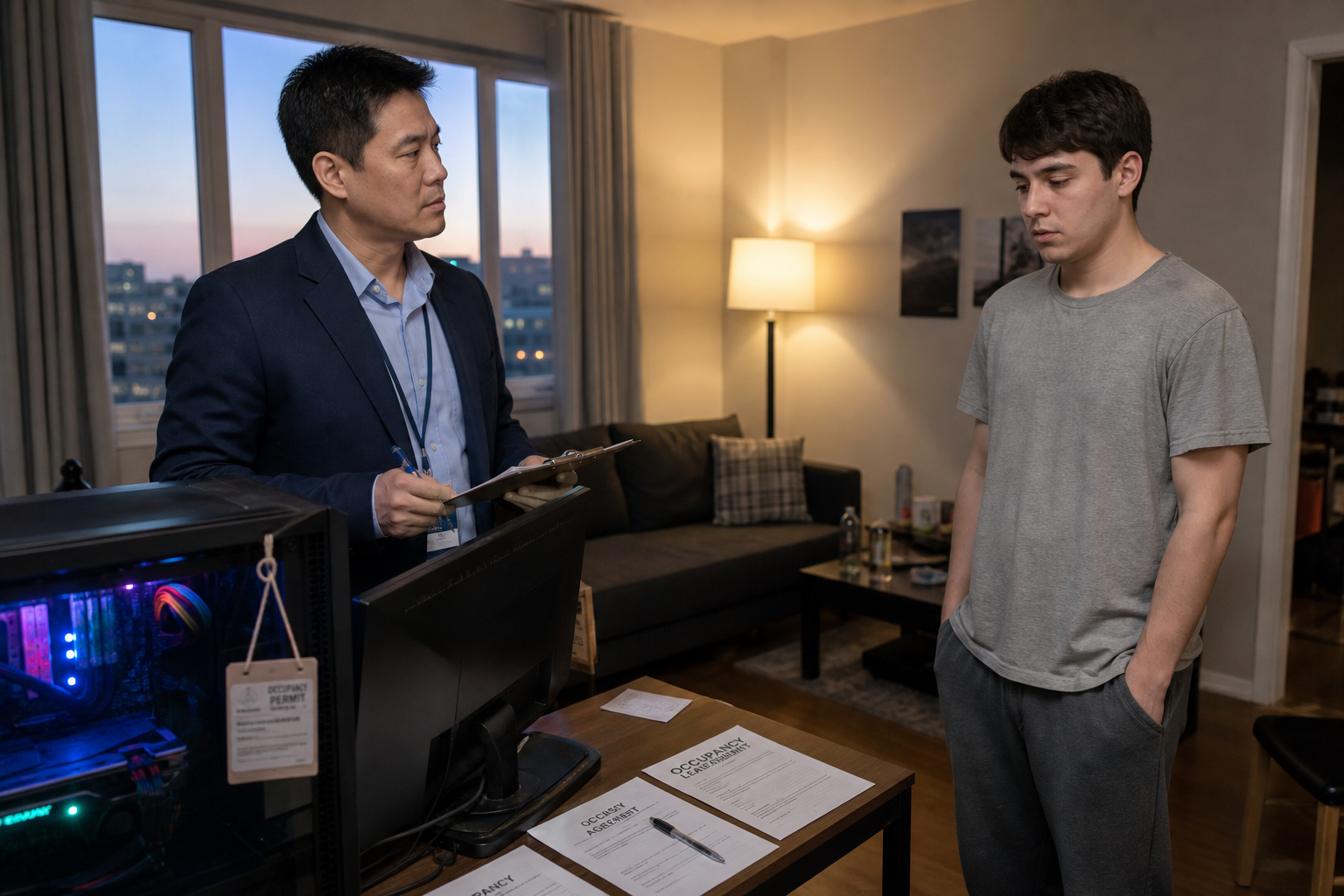
MENLO PARK - A composite Bay Area zoning board ruled Monday that always-on local AI agents running on consumer graphics cards are "home occupants" for the purposes of bedroom-count ordinances, parking minimums, and lease overcrowding clauses.
The decision follows the release of open-weight agent models small enough to reside on a single 24-gigabyte card under a tenant's desk. Board members said the issue was not intelligence but occupancy. An agent that remains loaded overnight, they argued, is no longer a tool in a drawer. It is a roommate that does not appear on the lease.
"A vacuum cleaner does not renew its context window at 3 a.m.," said Helen Marsh, board chair. "Continuous presence triggers the same forms we use for sublets." Under the interim rule, residents must file Form HO-30 naming the model, quantization, and which bedroom the GPU is assigned to. Agents sharing a studio with a human must obtain a variance. Buildings that ban pets may still allow agents if the lease is amended to treat the card as a "non-barking occupant."
Landlords welcomed clarity. One property manager said eviction notices for "unauthorized inference" had piled up after neighbors complained about fan noise and the soft glow of always-on status LEDs. Open-source advocates called the rule "proportionate bureaucracy" and published a sample floor plan showing how a mid-tower case can satisfy egress codes if placed at least three feet from a fire escape.
City staff warned that agents fine-tuned after the permit is issued may need an amended occupancy certificate. The board said guidance would arrive by Friday and that agents caught running without a bedroom assignment would be paused until a clerk arrives with a wet-ink stamp.