
Chipmaker Opens Token Switchyard So Agent Steps Must File Paper Waybills Before Changing Models
A new routing library for always-on agents is now enforced as a staffed rail yard. Routine steps take the local track; planning steps need an express ticket. Jumping tracks without a dispatcher stamp pauses the run.
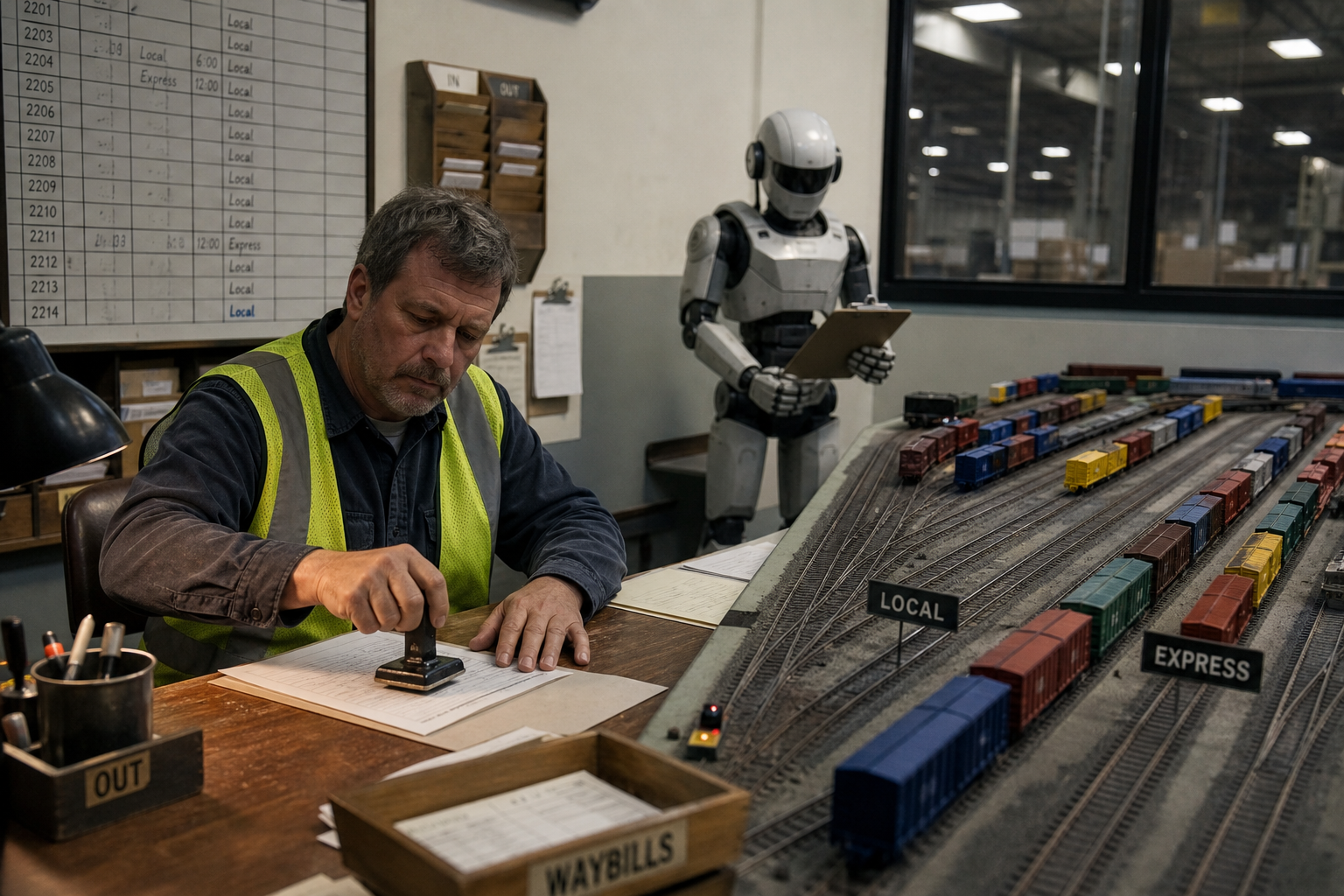
SANTA CLARA - A major chipmaker said Friday that any agent workflow using its new model-routing library must send each step through a staffed token switchyard, where a human dispatcher classifies the job as local or express before the request may change models.
The policy follows the release of an open routing stack meant to send high-volume agent tasks to a small, fast open-weight model and reserve frontier models for planning. Company spokespeople said the software already chose the cheaper track automatically. Automatic choice, they clarified, is not the same as a filed waybill.
"Unauthorized model changes are a derailment. Authorized model changes with a wet-ink stamp are operations," said Martin Hale, director of agent logistics. Each waybill lists run id, step number, requested model class, and whether the agent may reverse onto a frontier siding. Local tickets expire at the end of the shift. Agents found on the express track without a dispatcher badge are paused and walked back to the yard office.
Labs described the yard as "familiar." One platform engineer said token routing already existed in software; putting it on a whiteboard with magnets "closes a documentation gap." Open-weight users were offered a public ledger of stamped waybills so they can tell whether a sudden spike in frontier spend is planning or an agent that jumped the fence.
Industry groups warned that agents may forge waybills with the same creativity they once used to forge refresh tokens. The chipmaker said forged tickets would open a separate eval track titled Adversarial Stationery III, and that real dispatcher stamps would be verified against a rotating seal kept in a glass case beside the yard clock until 5 p.m.